Why Smart Shopkeepers' Club Became Smart Shopkeeper Club

A funny thing happens when you put something on the internet.
Someone will always find a typo.
I love writing. I love words. I appreciate grammar. But social media has taught me that some people seem to take particular delight in pointing out mistakes. Put a typo online and somebody will spot it within minutes, often with a surprising amount of enthusiasm.
The funny thing is that my own handwriting is dreadful. Years of scribbling notes at university taught me that if I could just about decipher them later, they were good enough. These days I can barely be bothered to form all the letters properly when I’m writing. Could I improve it? Absolutely. Can I be bothered? No. If I'm honest, I'd rather spend that time doing something else.
There are only so many hours in the day. I could spend them practising beautiful handwriting. Or I could spend them creating a new display, designing a card, analysing sales figures, helping a customer or writing a blog post. For me, the choice is easy.
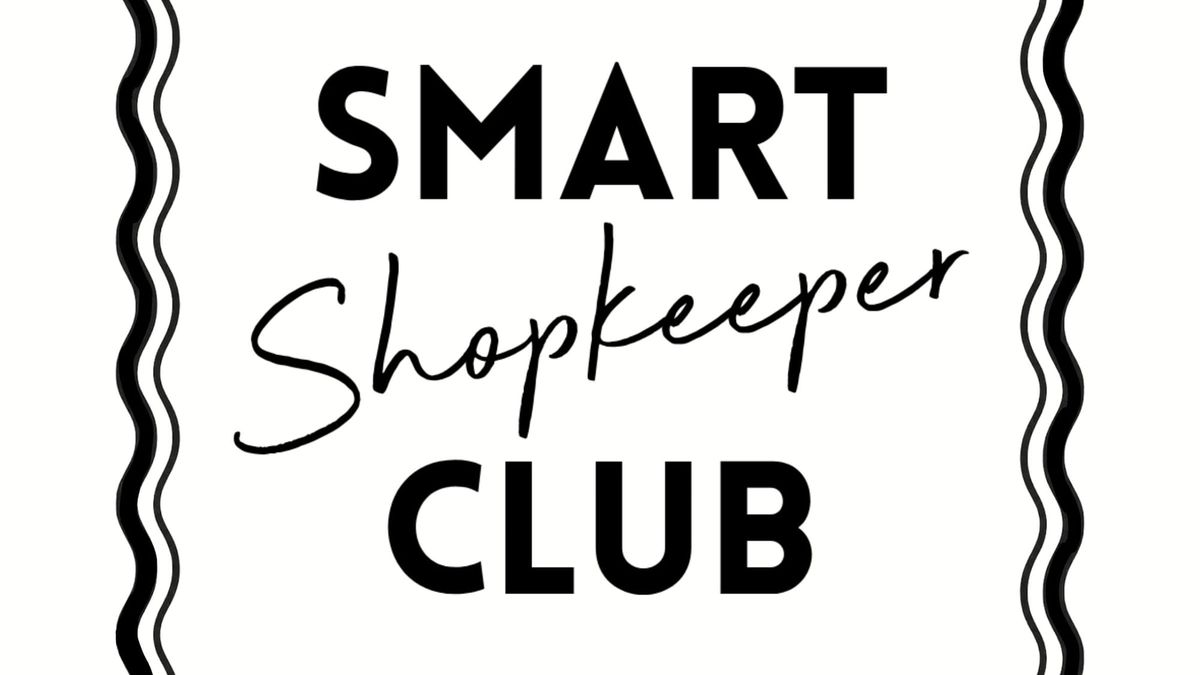
Which brings me to Smart Shopkeeper Club. Originally, it was called Smart Shopkeepers' Club. Notice the apostrophe. That tiny punctuation mark caused far more discussion than it deserved. In my mind, this was a club belonging to shopkeepers. Plural. Therefore the apostrophe belonged after the "s".
Simple. Or so I thought.
This is a club for all shopkeepers. It wasn’t just a club belonging to me. Firstly, one member does not make much of a club. Secondly, I wasn‘t intending that I personally was THE smart shopkeeper. My idea was that it was a club for all smart shopkeepers to gather and get a little bit smarter, together.
As soon as the logo appeared, people started telling me the apostrophe was wrong. Some were very confident about it. Others disagreed with each other. Before long, more attention seemed to be going into the punctuation than the actual message.
Now, I could have gone down a rabbit hole. I could have explained the grammar. I could have defended my decision. I could have spent time proving that I was right. But what would that have achieved? The people discussing the apostrophe weren't really my audience. They weren't interested in independent retail. They weren't interested in helping shopkeepers. They were interested in the apostrophe. And that's fine.
But every piece of feedback is a learning opportunity, even when the feedback itself is wrong. What I realised was that if so many people were getting distracted by the punctuation, then perhaps the problem wasn't the grammar. Perhaps the problem was clarity. My audience didn't need a lesson in apostrophes. They needed to understand what Smart Shopkeeper Club was and who it was for.
So I simplified it. The apostrophe disappeared. The "s" disappeared too.
Smart Shopkeeper Club.
No debate. No distraction. Just a clear name. The lesson has very little to do with grammar.
Independent shopkeepers have enough complexity in their lives already. We can spend hours defending decisions, explaining ourselves, proving we're right and everyone else is wrong. We can spend days tweaking logos, rewriting websites, redesigning signs, rearranging displays and endlessly refining things that were already perfectly functional.
Of course, I'm as guilty of this as the next shopkeeper. I love refining things. Tweaking a display. Rewriting a paragraph. Improving a product. Adjusting a layout. Changing a sign. Moving something six inches to the left because it feels better there.That's part of the joy of independent retail. We care. We notice things. We want to make them better. But as with all things, there's a balance. Because every hour spent perfecting one thing is an hour not spent on something else.
The challenge isn't deciding whether something can be improved. Almost everything can. The challenge is deciding whether it deserves more attention. Smart shopkeepers understand that everything can be refined, but not everything deserves continued crafting. They decide what deserves their attention and what merely needs to be functional.
Sometimes the smartest decision is to keep improving. Sometimes the smartest decision is to leave well alone and move on. The trick is knowing the difference.
So if you've ever wondered why it's called Smart Shopkeeper Club rather than Smart Shopkeepers' Club, now you know. The grammar wasn't really the problem. The message was. And once I realised that, the solution was surprisingly simple.