Help Your Customers Deliver Even More Smiles This Thinking of You Week

We all know what a card can do. It can make somebody smile, let them know they’ve been remembered, make them laugh, comfort them, or simply give them that lovely little feeling of someone saw this and thought of me.
And Thinking of You Week gives us a brilliant opportunity to remind customers that they don’t need to wait for a birthday, anniversary or major life event to send one. “I saw this and thought of you” is reason enough.
But last year, I started thinking about another part of the story. Our customers understand the difference a card can make to the person who receives it. But do they realise quite how much good can sit behind that one small purchase too?
If they buy that card from an independent shop, they are supporting the retailer who chose and stocked it. If it comes from an independent publisher or designer, they are supporting another small creative business. And if it’s printed here in Britain, their purchase reaches even further into the UK greeting card industry. That’s an awful lot of positive impact wrapped up in one small card-shaped bundle. The trouble is, most of it is completely invisible.
Discover the thought behind the card
That became the starting point for our Thinking of You Week campaign at More Than Just A Gift last year. Cards are incredibly personal products, but the people who create them are rarely visible at the point of sale. A customer might buy cards from the same designer again and again without ever realising that there is an actual person behind that distinctive style, often someone running a small independent business just like we are. So we decided to introduce them. Our campaign invitation was simply: Discover the thought behind the card.
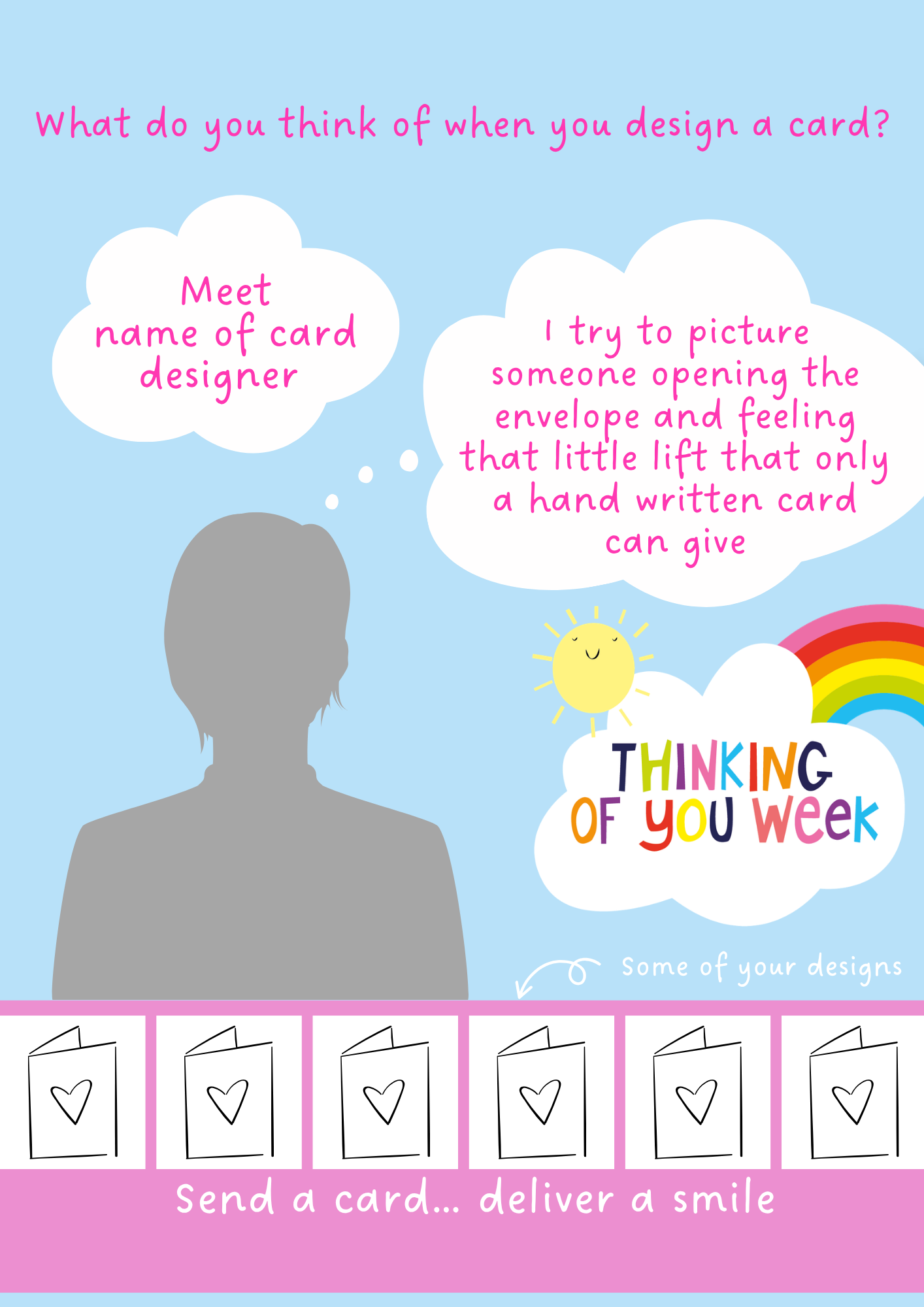
We asked several of the independent designers we stock for a friendly photograph and a few words about what they think about when they create a card. Then we displayed each profile right beside their cards. We added rainbows, smiling faces and plenty of colour to make the whole thing noticeable and celebratory, but the decoration wasn’t really the point.
The people were. This is Laura. This is Jude. These are the cards they create. Suddenly an assortment of lovely cards becomes the work of a real human being who has put their own ideas, humour, talent and care into them. “People buy from people” might be one of those phrases we’ve all heard a thousand times, but in independent retail it remains absolutely true.
From recognising the designer to discovering more cards
The reaction I was hoping for was something along the lines of: “Oh! So this is the person who makes all those cards I like.” And then, hopefully: “What else have they done?” That second question matters. Because once somebody starts properly exploring a collection rather than heading directly to the caption they came in for, something different happens. They stop shopping purely by requirement.
Instead of: I need a birthday card for my sister. It becomes: That card is so Sarah. I need to send her that. And that is exactly where Thinking of You Week becomes so powerful.
The cards we featured were open designs rather than cards carrying a particular occasion or relationship. Customers could simply browse, spot something that made them think of somebody and buy it because they wanted that person to receive it. The card itself created the reason to send.
One card, several smiles
There’s another lovely layer to that purchase too. The person receiving the card gets the obvious benefit. Somebody has thought about them, chosen something especially for them, written in it and made the effort to send or give it. But the independent shop benefits too. So does the designer or publisher whose work the customer has chosen. And where those cards are manufactured in Britain, that support travels further through our wider industry. So one relatively small purchase can create a ripple through several different people and businesses.
That doesn’t mean we need to make customers feel that buying a card is some sort of moral obligation. They should buy the card because they love it. But knowing a little more about the people behind what they are buying adds another rewarding dimension to the purchase. It gives them another reason to value what’s on our shelves, another reason to choose independent and, hopefully, another reason to come back.
What happened in our shop?
What I noticed first wasn’t a sales figure. It was that people stopped. They read the designer profiles. They talked about them. They looked through the collections much more carefully. Rather than marching straight to the caption they had come in to find, they lingered. And for me, that was one of the most interesting things about the whole campaign. It changed the way people interacted with the card department.
Customers started seeing connections between individual designs. They recognised a designer’s style. They discovered cards they might otherwise have walked straight past. And, crucially for Thinking of You Week, they started thinking about other people they could send them to. The commercial result was pretty encouraging too. Our card sales during the campaign were more than 30% higher than in the equivalent period the previous year.
I’m always very cautious about claiming that one idea caused a particular sales result. Retail doesn’t work that neatly and there might be other factors involved. But the designer profiles were the central idea behind the campaign and the biggest change we had made to the card-buying experience during that period. So it certainly gave me enough evidence to believe that making the people behind our cards more visible can do more than create a nice story. It can encourage customers to engage more deeply, browse for longer, discover more cards and find more reasons to send them.
You really don’t need to make it complicated
This is also one of those ideas that can be as small or as ambitious as you want it to be. You certainly don’t need a huge installation. Pick three or four designers whose work already has a strong presence in your shop. Ask each of them for a friendly photograph and an answer to one very simple question, such as:
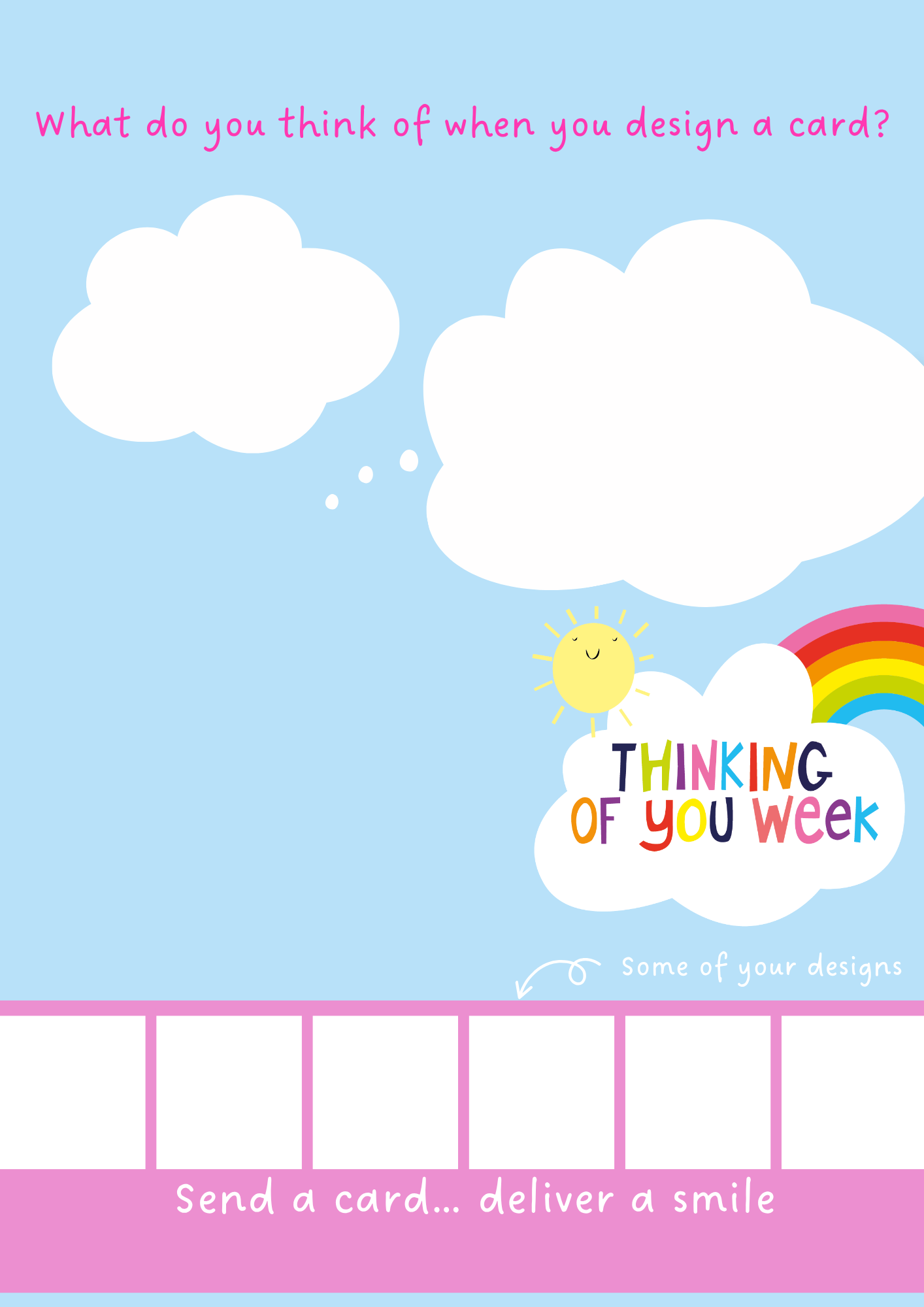
What do you think about when you design a card? Put their answer right beside their cards. Make sure there are plenty of open designs within the display so customers don’t need a particular occasion before they can buy one. And that’s really it. This is the person. These are their thoughts. These are the cards they create. Then let your customers make the connections.
Make the invisible visible
Thinking of You Week already gives us a wonderful reason to talk about sending more cards simply because somebody has come to mind. As independent retailers, I think we can take that message just one small step further. We can help customers see the usually invisible chain of people behind the card they are holding. The recipient they are about to make smile. The shop where they discovered it. The designer who dreamt it up. And there is something rather lovely about that.
This Thinking of You Week, why not introduce your customers to a few of the people behind the cards they already love? Let them browse. Let the cards themselves bring people to mind. They might come into your shop looking for the one card they need and leave with three they simply wanted to send. And there could be a few extra smiles created along the way.