No Rushing, No Pushing - Why 70% is Enough

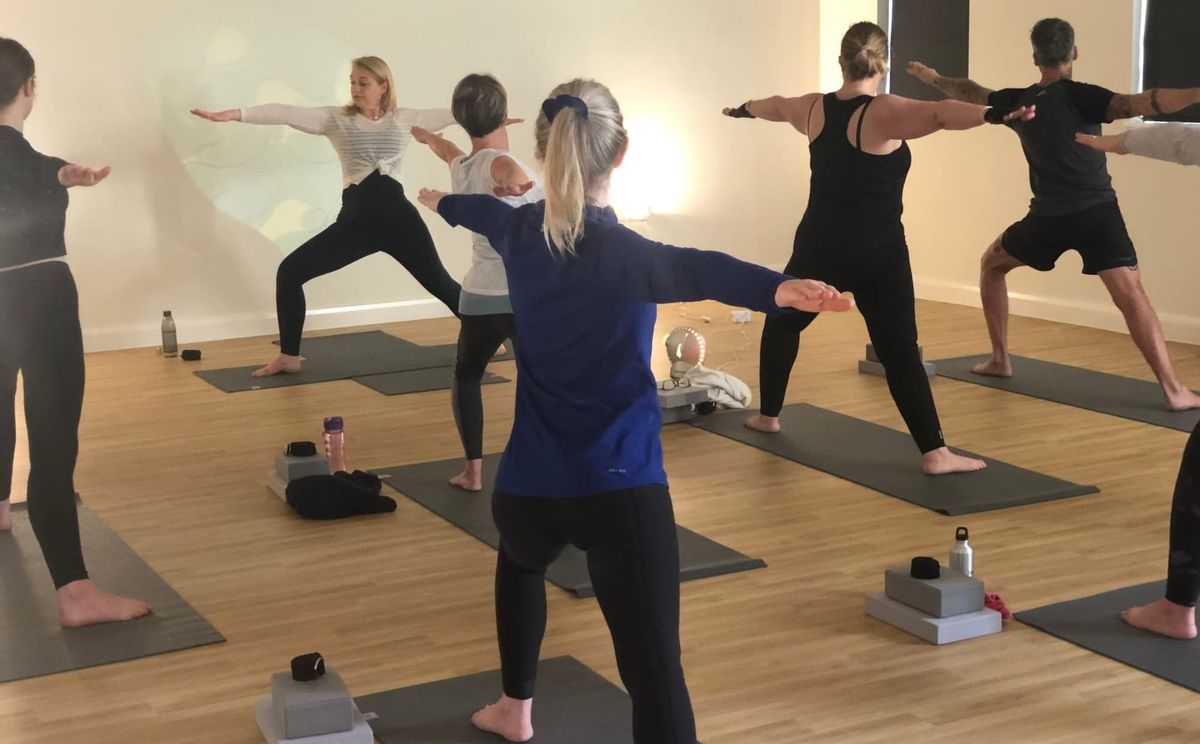
“No rushing, no pushing.”
It’s something I say regularly in yoga classes. A gentle reminder to stop forcing. To stop straining. To stop trying to wrestle life into submission.
And lately I’ve realised it applies just as much to running a small business as it does to yoga.
Especially now.
Because modern business culture often feels built on the exact opposite message.
Push harder.
Move faster.
Scale bigger.
Optimise everything.
Wake up earlier.
Do more.
Outperform everyone.
There’s this constant underlying feeling that if you’re not exhausted, slightly anxious and permanently behind, you must not be trying hard enough.
But I honestly don’t think that’s true.
Some of the best things we’ve ever done in our shop didn’t come from frantic energy. They came from steady observation, thoughtful adjustments and sustained effort over time.
Not rushing.
Not pushing.
Just continuing.
That doesn’t mean sitting around manifesting success while ignoring reality. Independent retailers don’t have that luxury. We all know this job requires hard work, resilience and adaptability.
But there’s a difference between working hard and constantly forcing.
One creates momentum.
The other creates burnout.
And I think many shopkeepers are carrying far more tension than they realise.
Trying to make the perfect display.
The perfect Instagram post.
The perfect event.
The perfect product selection.
The perfect plan for the future.
All while simultaneously serving customers, unpacking deliveries, solving staff problems, answering emails, cleaning shelves, handling admin, watching margins and trying to have some kind of life outside work too.
It’s a lot.
And because retail is visible, emotional and personal, it’s very easy to become overly attached to outcomes.
If sales dip, it feels personal.
If an event underperforms, it feels personal.
If a post flops, it feels personal.
But attachment creates pressure. And pressure rarely helps good decision making.
I actually think one of the biggest strengths a shopkeeper can develop is the ability to keep steering calmly even when conditions change.
A good captain doesn’t scream at the sea for being rough.
They adjust the sails.
That’s all we’re really doing in independent retail most of the time. Reading conditions. Responding. Correcting course. Continuing forward.
Some days the shop feels full of energy and momentum. Other days it feels heavy and uncertain. Some ideas work brilliantly. Others don’t land at all.
That’s normal.
And maybe the answer isn’t to force harder.
Maybe it’s to build businesses and lives that can sustain steady effort over the long term without destroying ourselves in the process.
I recently heard an economics professor talking about the idea of only giving 70%.
At first that sounded completely wrong to me. Surely success comes from giving 100%?
But the more I thought about it, the more I understood what he meant.
Giving 100% all the time isn’t sustainable. It creates tension, perfectionism and burnout. Whereas leaving some reserve allows you to keep going consistently.
And consistency matters far more than intensity.
Especially in shopkeeping.
Because this isn’t a sprint. Most of us are trying to build something that lasts years, decades even. You cannot operate permanently in emergency mode.
You need energy left for creativity.
For judgement.
For patience.
For life.
The same applies emotionally too.
Another thing he mentioned was waiting eight seconds before reacting to something.
Again, that struck a chord with me immediately.
Because how many problems in business are made worse by instant emotional reactions?
A frustrating customer.
A difficult email.
A disappointing sales day.
A stressful supplier issue.
That tiny pause between stimulus and response matters more than we think.
Yoga teaches this too.
Breathe first.
Observe first.
Then respond consciously instead of reacting automatically.
There’s wisdom in that.
Particularly in modern life where everything is designed to make us react instantly to everything all the time.
So perhaps “no rushing, no pushing” isn’t soft or unrealistic after all.
Perhaps it’s actually a very practical survival strategy.
Steady effort.
Responsive adjustments.
Less forcing.
More observing.
Less panic.
More perspective.
Still moving forward.
Just without fighting the tide every step of the way.