Why Does My Greeting Card Department Even Exist?

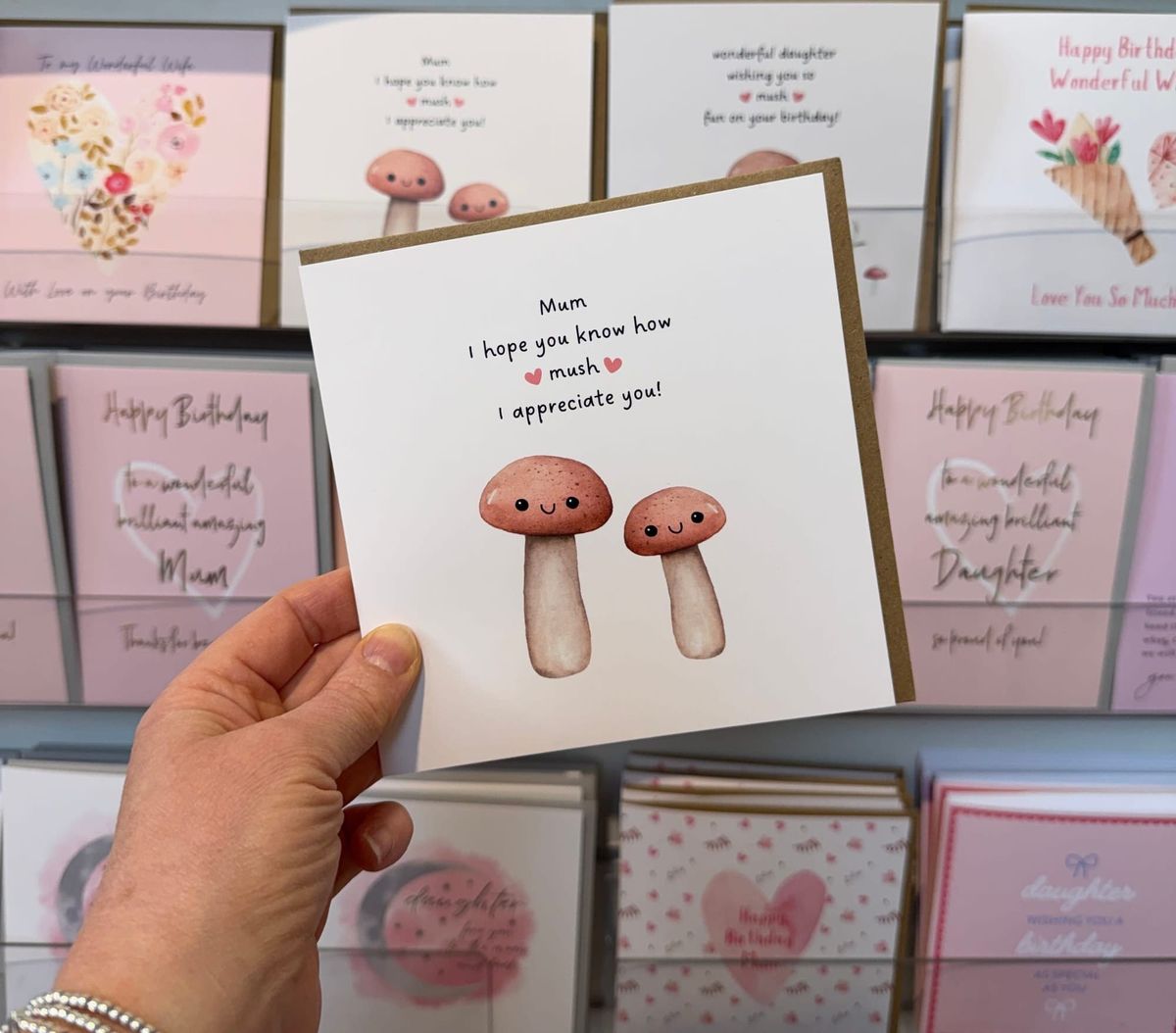
Over the past three years, our shop’s greeting card sales have almost quadrupled.
On paper, that shouldn't really be happening.
Just two miles from our shop is one of the country's largest shopping parks, attracting more than 13 million visits a year. My customers are already there, all the time. They can buy groceries, clothes, furniture, tvs, white goods, homeware, toiletries, flowers… and choose from thousands upon thousands of greeting cards.
They can buy them more cheaply. They can buy them more conveniently. They can buy them while doing the weekly shop. They can buy cards whenever they go out shopping anywhere.
And of course they can order cards online without even leaving the sofa.
Our shop, on the other hand, has virtually no passing footfall. We’re on a side street in a village, no where near any other retail. Nobody accidentally wanders into our shop. Every customer has made a conscious effort to come. It’s inconvenient. It requires effort. By almost every conventional measure of modern retail, my greeting card department shouldn't really exist.
And yet it doesn't just exist. It's growing.
The more I've thought about this apparent contradiction, the more I've come to realise that perhaps it isn't a contradiction at all. In fact, everything I've learnt over the past thirty years watching customers has led me to exactly the opposite conclusion.
Perhaps we've been asking the wrong question. For years, retailers have quite rightly been told to remove friction. Make things faster. Easier. More convenient. And for many purchases, that's exactly what customers want.
But what if greeting cards are different?
After all, every greeting card performs almost exactly the same practical function. It's a folded piece of card with an envelope. In purely functional terms, they're almost identical.
So why do customers stand in front of a card display for fifteen minutes? Why do they pick one up, smile, put it back and choose another? Why do they reject twenty cards before finally saying, "That's the one"? Because they aren't simply buying a folded piece of card. They're choosing a relationship.
The card isn't valuable because it's made from particularly special paper. It's valuable because of what the choice communicates. I saw this and thought of you. This made me laugh because it's exactly you. I wanted to find one that felt just right.
The recipient doesn't simply receive a greeting card. They receive the time, thought and care that went into choosing this particular one. Perhaps that's why greeting cards continue to behave differently from so many other retail categories. If convenience were the only thing that mattered, supermarkets and online retailers would surely have won years ago.
Instead, a substantial proportion of people still make a separate journey to an independent card shop. Not because they can’t buy a card elsewhere, but because they don’t want just a card. They want one that means more. And where and how you buy it creates more meaning.
Maybe we've spent so long assuming that all friction is bad that we've overlooked something important. Perhaps, when it comes to greeting cards, the browsing, comparing, smiling, rejecting and eventually finding exactly the right design isn't friction at all. Perhaps it's part of the gift.