So What Happened When We Tried It?

When I launched Small Shop Summer last year, I genuinely didn’t know what would happen. The idea seemed sound enough. I’d seen first-hand how powerful a good campaign could be during our award-winning Female Founders Month initiative. Customers had engaged with the message, embraced the stories and responded positively with their wallets.
But Small Shop Summer was different. This wasn’t a campaign focused on a particular product category or occasion. It was a campaign about independent shops themselves. The aim wasn’t to drive customers towards a particular purchase. It was to encourage them to think differently about all their purchases. To notice independent businesses. To value them. To choose them. To recommend them. To feel good about supporting them.
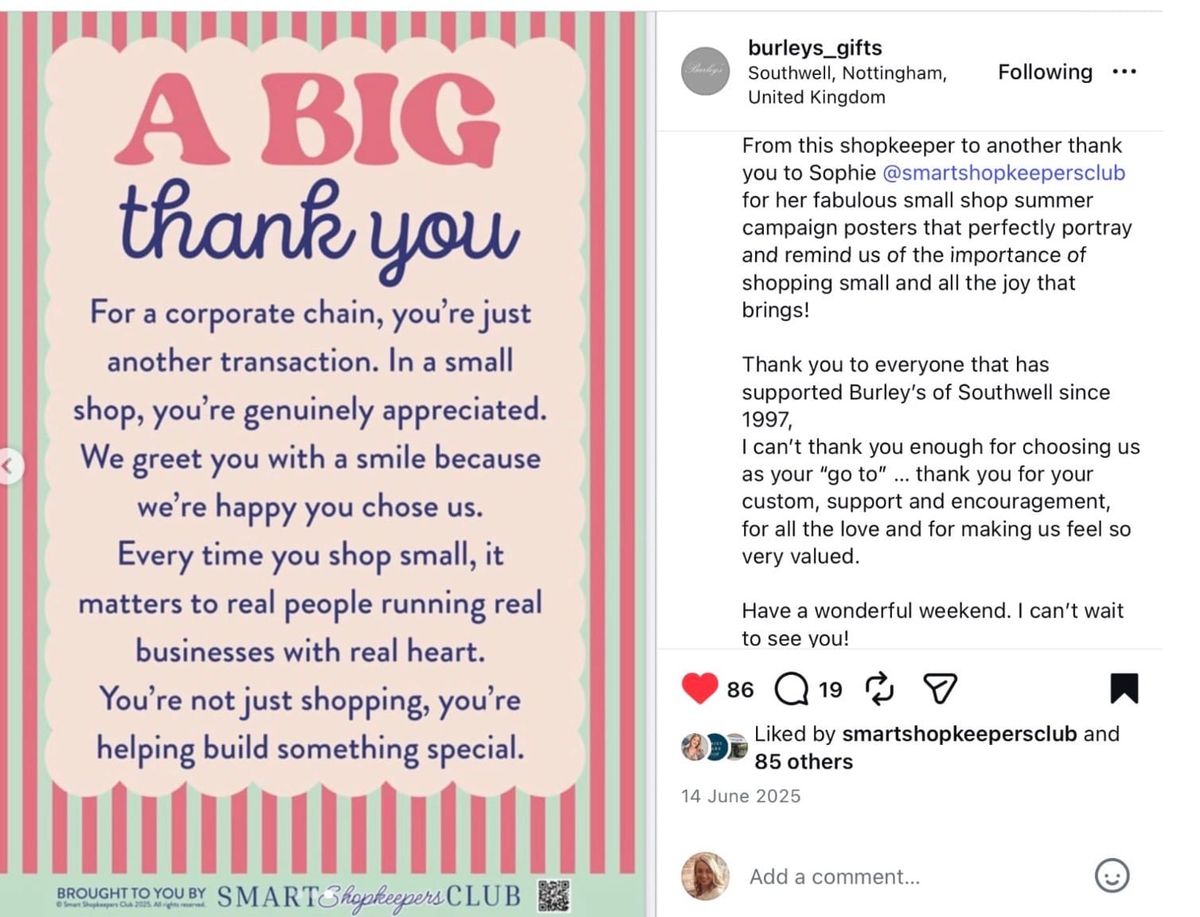
A few weeks after launching the campaign, I came across a social media post from a fellow independent retailer, Burley’s Gifts of Southwell (a shop definitely worth a visit if you’re ever in the area). Alongside one of the campaign posters, she wrote:
“Thank you to Sophie for her fabulous Small Shop Summer campaign posters that perfectly portray and remind us of the importance of shopping small and all the joy that brings.”
At the time, I remember smiling. Not just because someone had used one of the resources. But because she’d articulated the purpose of the campaign so well. The campaign was a reminder. A reminder of the joy, creativity, individuality and character that independent businesses bring to our towns and villages. A reminder that where we spend our money has an impact. And a reminder that many customers already value independent shops far more than we sometimes realise.
And it resulted in an activation. It resulted in customers making active choices. Doing something intentional. Encouraging, supporting, valuing and choosing small shops. Knowing that it matters and, more importantly, ACTING like it matters.
The campaign wasn’t designed to persuade customers that independent businesses matter. Most people already know they do. It was designed to bring those beliefs to the surface and turn them into action. To help customers connect a simple purchase with something bigger. A visit to a small shop stopped feeling like just another transaction. It became a positive choice. A conscious choice. A contribution to the kind of high street, village or town centre they wanted to see flourish.
Throughout the summer, we could see the effects. Customers paused to read the messaging. They commented on the posters. They shared stories about why they love independents. They talked about shopping locally. They went away and recommended small shops to friends and family. Many returned throughout the summer and actively engaged with the message again.
Perhaps most interestingly, customers enjoyed it. The campaign gave them permission to celebrate something they already valued. It helped them feel good about choices they were already inclined to make. And when people feel good about a behaviour, they’re more likely to repeat it.
Can I prove exactly how many purchases, recommendations or repeat visits resulted from those conversations? No. But the anecdotal evidence was certainly encouraging. The campaign didn’t just create awareness. It created participation. And it left me with a growing suspicion that we had stumbled across something important.
The following year, some fascinating new research would make me even more confident that we were onto something.